
Volume-based Healthcare
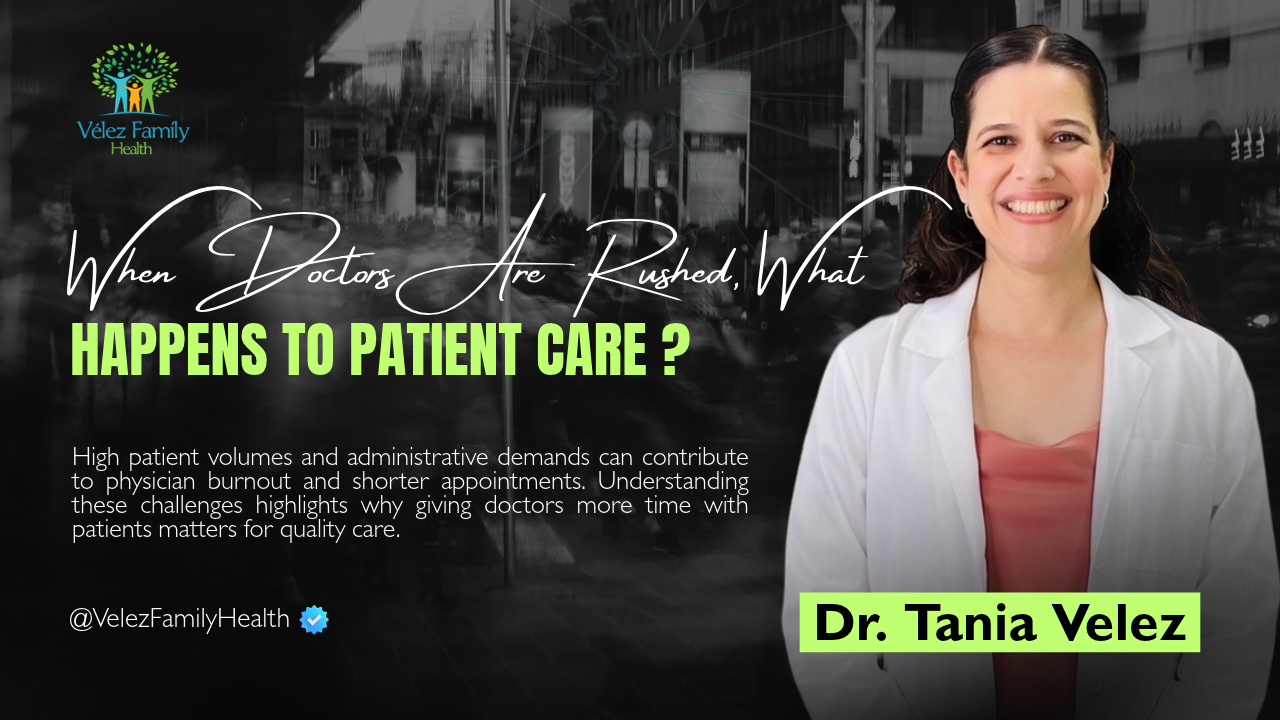
When Doctors Are Rushed, What Happens to Patient Care?
Understanding how volume-based healthcare contributes to physician burnout and why time with patients matters.
You arrive at your doctor's appointment with several concerns, but the visit feels shorter than expected. Your physician listens, reviews your symptoms, and recommends a treatment. Before you know it, the appointment is over.
What patients may not realize is that their physician could be experiencing the same frustration.
In many healthcare settings, physicians are expected to manage high patient volumes while completing extensive documentation and administrative responsibilities. This can leave limited time for the part of medicine that brought many physicians into the profession: caring for patients.
At Velez Family Health in Orlando, Dr. Tania Velez practices Direct Primary Care (DPC), a membership-based model designed to create more time for patients and reduce dependence on high-volume, visit-based billing.
🔗 Explore Direct Primary Care at Velez Family Health
Why Are So Many Physicians Feeling Burned Out?
Physician burnout is a complex issue influenced by workload, administrative demands, limited autonomy, and organizational pressures.
In traditional fee-for-service healthcare, revenue is often connected to the number and type of services delivered. This can create pressure to maintain busy appointment schedules. Dr. Velez describes one of the challenges:
"Our system is set up to be volume-based rather than time-based, and it leads to burnout."
In some hospital-owned or corporate practices, productivity expectations may further influence appointment schedules and the time physicians can spend with individual patients.
Although practice structures vary, high workloads and limited control over daily responsibilities can contribute to professional exhaustion.
The Work Patients Rarely See
A physician's workday involves much more than examining patients.
Reviewing medical records, completing clinical documentation, processing prescription requests, coordinating referrals, and responding to administrative requirements all take time.
These responsibilities are important, but inefficient systems and repetitive paperwork can reduce the time available for direct patient care. Dr. Velez explains:
What happens when physicians are expected to see more patients in less time? 🩺 Dr. Tania Velez discusses physician burnout within volume based healthcare and how packed schedules, administrative demands, and limited patient time can affect both doctors and the care experience. Direct Primary Care offers a different model focused on smaller patient panels, stronger physician patient relationships, greater access, and more time for thoughtful primary care. Creating a healthier healthcare experience means considering the wellbeing of both patients and the physicians caring for them.
"Most of our time is not spent seeing patients. Most of our time is spent on paperwork and monotonous things that have nothing to do with how I take care of the patient."
When administrative work becomes overwhelming, it can affect both physician well-being and the experience patients have during appointments.
How Can Physician Burnout Affect Patients?
Burnout is not simply about physicians feeling tired after a demanding day.
Persistent workplace stress can affect professional satisfaction, communication, and the ability to remain fully engaged during clinical encounters.
For patients, a high-pressure healthcare environment may mean shorter appointments, less opportunity to ask questions, or difficulty accessing their physician between visits.
This does not mean physicians in traditional practices provide poor care. Many deliver excellent care despite demanding conditions.
However, a healthcare system that gives physicians adequate time and support can create better conditions for meaningful patient interactions.
How Does Direct Primary Care Approach This Differently?
Direct Primary Care changes the financial structure of primary care by using a predictable monthly membership fee for included services rather than billing separately for every included visit.
This allows participating practices to organize care around a different set of priorities.
At Velez Family Health, the model supports longer appointments, direct physician communication, and ongoing relationships with patients.
Instead of focusing primarily on the number of appointments completed, Dr. Velez can spend more time understanding medical concerns, discussing treatment options, and addressing preventive health needs.
DPC does not eliminate documentation, clinical responsibilities, or every source of physician stress. However, it can reduce certain pressures associated with high-volume, fee-for-service care.
🔗 Learn How Direct Primary Care Membership Works
Why Time Matters on Both Sides of the Examination Room
A patient may arrive with a symptom that seems straightforward, but the underlying concern can involve several factors.
A discussion about fatigue, for example, may require reviewing medications, sleep, nutrition, medical history, and whether additional evaluation is appropriate.
Having enough time allows the physician to consider the broader clinical picture and gives the patient an opportunity to understand the recommended next steps. For Dr. Velez, combining Family Medicine and Integrative Medicine means considering the patient's overall health while addressing immediate medical needs.
The value of a longer appointment is not simply its duration. It is what that time makes possible.
Healthcare Should Support the People Giving and Receiving Care
Physician burnout deserves attention because it affects the people responsible for delivering healthcare and the environments in which patients receive it.
Reducing unnecessary administrative burdens, supporting physician autonomy, and allowing adequate time for clinical care are important considerations across healthcare models.
Direct Primary Care offers one approach to addressing some of these challenges by placing greater emphasis on physician-patient relationships rather than appointment volume.
For patients, the question is worth considering: Does your current primary care experience give you and your physician enough time for the conversations that matter?
If you're exploring a more personal approach to primary care in Orlando, a Meet & Greet at Velez Family Health can help you understand how DPC works and whether it fits your needs.
—
Dr. Tania Velez, Velez Family Health
📍 Orlando, Florida
🔗 https://velezfamilyhealth.com/direct-primary-care-orlando-florida
🔗 Schedule Your Immigration Medical Exam: https://velezfamilyhealth.com/immigrationexams